Kitchen Benchtops Compared: Materials, Cost & How to Choose (2026)
With engineered stone now banned in Australia, here are the benchtops builders actually use in 2026 — porcelain, natural stone, timber, steel and laminate — compared on cost and durability.
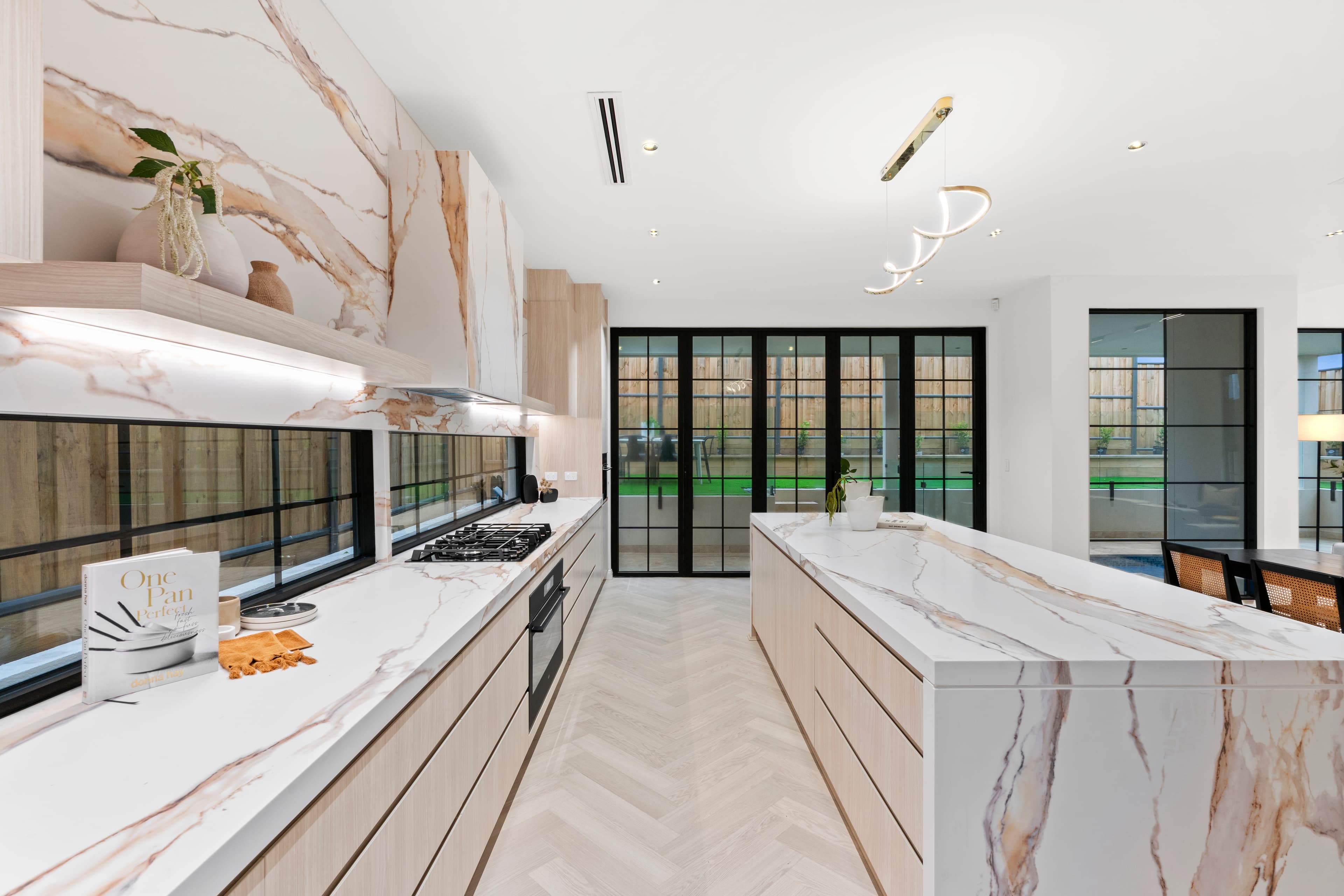
Since Australia banned engineered (quartz) stone from 1 July 2024 for worker-safety reasons, the go-to benchtop for 2026 kitchens is porcelain or sintered stone — silica-safe, ultra-hard, and priced around $900–$1,800/m² supplied and installed. Natural marble and granite, timber, stainless steel and laminate round out the choices. Here's what each material costs, how it performs, and how to choose the right one.
First: engineered stone is banned
If you've been pinning quartz benchtops — the traditional Caesarstone-style engineered stone — it's important to know they're no longer an option. From 1 July 2024, Australia prohibited the manufacture, supply and installation of engineered stone benchtops because cutting the high-silica material exposed tradespeople to silica dust and a serious, irreversible lung disease called silicosis. So in 2026, any reputable builder will steer you to the safe materials below — not quartz. The good news is the alternatives look every bit as good and, in most cases, perform better.
Benchtop materials & cost compared
These are real, supplied-and-installed ranges for a typical Northern Beaches kitchen in 2026 — templating, fabrication and installation included, not slab-only prices.
| Material | Approx. cost/m² | Notes |
|---|---|---|
| Porcelain / sintered stone | $900 – $1,800/m² | Silica-safe, ultra-hard, heat- and UV-stable; the go-to stone look now. |
| Natural stone — marble | $900 – $1,600/m² | Timeless and luxurious; porous, so it needs sealing and a little care. |
| Natural stone — granite | $700 – $1,300/m² | Extremely durable and heat-resistant; a busier natural pattern. |
| Timber | $500 – $1,000/m² | Warm and repairable; needs oiling and care around water. |
| Stainless steel | $800 – $1,500/m² | Hygienic and near-indestructible; a true chef's-kitchen look. |
| Laminate | $150 – $400/m² | Best budget option; huge range of looks, but not heat-proof. |
Thickness, edge profile, a waterfall island and the number of cut-outs all move the price. For a firm figure on your kitchen, ask for a fixed-price quote.
The materials builders use now
Porcelain & sintered stone
This is the modern default and the natural successor to engineered stone. Made from natural clays and minerals fired at high temperature, porcelain and sintered surfaces (Dekton-style) are extremely hard, scratch- and heat-resistant, UV-stable and low in crystalline silica. They come in a vast range of marble, concrete and solid looks, and can be run as a benchtop and full-height splashback for a seamless finish. The main trade-off is that a hard knock on an edge can chip.
Natural stone — marble & granite
Natural stone is the luxury choice, and every slab is unique. Marble brings that unmistakable soft, veined elegance — but it's porous, so it can etch and stain and needs sealing and gentle care. Granite is far tougher and heat-resistant with a busier grain, and it's a workhorse. Many clients use a marble island as the hero and a hardier surface on the working runs to get the best of both.
Timber
A timber benchtop adds warmth and a natural, tactile feel that stone can't match, and it's the one surface you can sand and re-oil to look new again. It suits an island, a coffee station or a Hamptons and country look. Keep it away from constant water and hot pans, and give it a regular oil, and it ages beautifully.
Choosing a benchtop for your new kitchen?
Get a free, fixed-price quote — our in-house stonemasons will help you pick the right surface for how you cook and live.
Stainless steel
Loved by chefs for good reason — stainless is hygienic, heat-proof, seamless and virtually indestructible, which is why it rules commercial kitchens. It shows fingerprints and fine scratches over time (many people like the patina), and it gives a home kitchen a serious, professional edge.
Laminate
Laminate has come a long way and remains the smart budget choice, especially in a laundry, a rental or a unit or apartment renovation where you're watching the numbers. The range of realistic stone and timber looks is huge, and modern boards are water- and wear-resistant. It's not heat-proof, so always use a trivet.
How to choose
- Want the stone look with the least fuss? Porcelain or sintered stone — hard-wearing, heat-safe and silica-free.
- After a wow-factor island? Natural marble or granite, ideally paired with a tougher surface on the working runs.
- Chasing warmth? Timber, on an island or a feature run.
- Cook seriously? Stainless steel for its hygiene and heat resistance.
- On a budget? Quality laminate gives you the look for a fraction of the cost.
The Reno Build way
We've fitted benchtops in more than 5,000 kitchens and bathrooms across the Northern Beaches since 2009, and our stonemasons and cabinet makers are in-house — so templating, fabrication and install are handled by one accountable team, safely and to the current regulations, on a fixed price with a signed date under our 21-day guarantee. Planning the whole kitchen? See our kitchen renovation cost guide for scope and pricing.
Frequently asked questions
From 1 July 2024, Australia prohibited the manufacture, supply and installation of engineered (quartz) stone benchtops to protect tradespeople from silicosis, a serious lung disease caused by cutting the high-silica material. It means the popular quartz-style benchtops are no longer a legal option for new kitchens.
Porcelain and sintered stone are the closest like-for-like replacements — they offer a huge range of stone and concrete looks, are extremely hard and heat-resistant, and contain little or no crystalline silica. Natural stone such as marble and granite is the other premium choice.
For a typical kitchen, supplied and installed benchtops run roughly $900–$1,800/m² for porcelain or sintered stone and $700–$1,600/m² for natural granite or marble. Timber and laminate cost less, while stainless steel sits in the mid-to-upper range.
Marble is beautiful and adds real value, but it's porous and can etch or stain from acids like lemon and wine, so it needs sealing and a little care. Many clients love it on an island as a feature and choose a tougher porcelain for the hard-working runs.
Porcelain and sintered stone are among the hardest, most scratch- and heat-resistant surfaces available, and stainless steel is virtually indestructible and hygienic. Granite is also extremely tough, while marble and timber are softer and need more care.